
Leg Pain? Understanding Sciatica: What You Need to Know | Physiotherapy

If you’ve been experiencing pain that radiates down your leg, tingling or numbness in your foot or calf, or a burning, shooting sensation in your lower limb, you might be wondering: “Do I have sciatica?” It’s not always easy to tell, and many people confuse sciatica with general lower back pain.
In this blog, our physiotherapists break down what sciatica really is, how it develops, the common signs and symptoms to watch for, risk factors, and why getting a professional physiotherapy assessment for sciatica is so important. By the end, you’ll have a clearer understanding of whether your symptoms could be related to true sciatica and what steps you can take next.
What is Sciatica and Sciatic Nerve?
The sciatic nerve plays a crucial role in our body. It not only provides sensation to the lower limb but also controls the muscles, carrying both sensory and motor signals. As the largest nerve in the human body, it originates from the terminal branch of the lumbosacral plexus (Giuffre et al., 2023) and travels down the leg, branching into two before ending at the foot.
Sciatica is an umbrella term often used to describe radicular pain or radiculopathy (Boxem et al., 2010; Peene et al., 2023). In simpler terms, it refers to pain that radiates in a specific area or occurs alongside changes in sensation, muscle strength, or reflexes.

How common is Sciatica?
Despite its common association with back pain, true sciatica is less prevalent than many expect. Studies show a lifetime incidence of 10-40%, with an annual incidence of 1-5% (Alexander and Varacallo, 2021).
Causes of Sciatic Nerve Irritation
Several factors can irritate the sciatic nerve, including:
Nerve root compression or irritation
Spinal canal narrowing
Trauma
Lumbar disc herniation (Fairag et al., 2022)
This irritation can disrupt the normal sensory and motor signals, causing pain. However, sometimes the sciatic nerve may simply be “unhappy,” which is why it’s important to seek professional advice rather than self-diagnose.
Common Symptoms
Sciatica typically presents with:
Pain radiating below the knee, potentially into the calf, shin, or foot
Leg pain that is equal to or worse than back pain
Sensory changes such as pins and needles, numbness, altered reflexes, or motor changes
A burning, electric, or shooting pain sensation (Alexander and Varacallo, 2021)

Risk Factors
Certain factors can increase the likelihood of developing sciatica, including (Parreira et al., 2018):
Poor general health, smoking, or obesity
Psychological stress
Diabetes
If you experience unusual symptoms, such as changes in bladder or bowel function or saddle anaesthesia, it’s crucial to seek medical attention immediately.
How Physiotherapy Can Help Sciatica
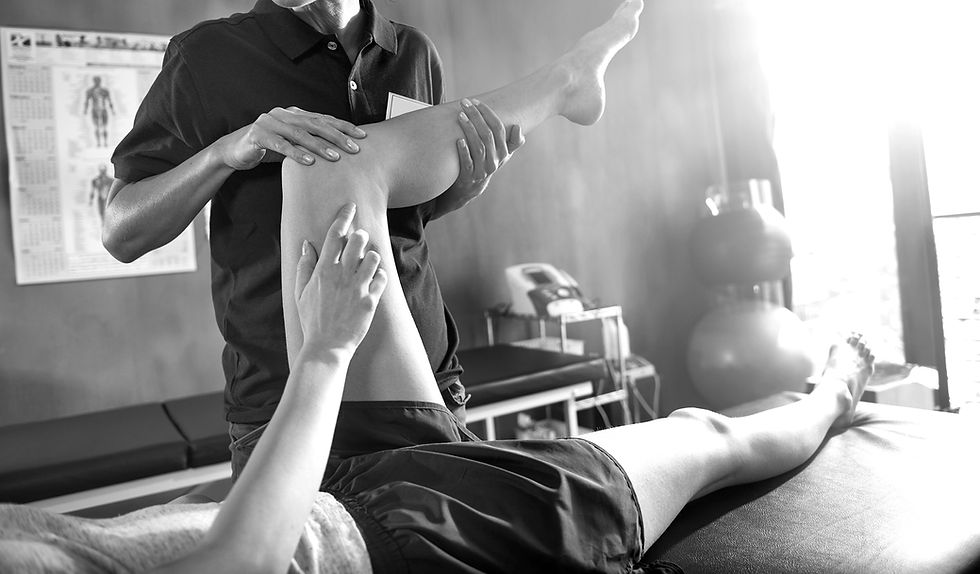
We understand that pain can disrupt everyday life. Identifying true sciatica is key, which is why our physiotherapists conduct detailed assessments before creating an individualised treatment plan.
Our approach focuses on alleviating pain, restoring function, and supporting long-term recovery.
If you have questions or are experiencing symptoms, reach out to our physiotherapy team at SPG. We’re here to help you get back to living without pain.
Important
If your symptoms worsen, or change significantly, such as becoming severe pain, sudden weakness, unexplained weight loss, fever, unrelenting night pain, foot drop, loss of bowel or bladder control, visual disturbances, chest pains, difficulty swallowing or speaking, numbness or anything that feels unusual or concerning, it’s always best to get checked at A&E/Emergency Department – just to be on the safe side.
References
1. Van Boxem K, Cheng J, Patijn J, van Kleef M, Lataster A, Mekhail N, et al. 11.
Lumbosacral radicular pain. Pain Pract. 2010; 10: 339–358.
2. Peene, L., Cohen, S.P., Kallewaard J.W., Wolffe, A., Huygen, F., Gaag, A.VD.,
Monique, S., Vissers, K., Gilligan, C., Zundert, J.V., Boxem, K.V. Lumbosacral
radicular pain. Pain Pract. 2023; 24: 525-552.
3. Alexander CE, Varacallo M Lumbosacral Radiculopathy. In: StatPearls Treasure
Island (FL) StatPearls Publishing 2021
4. Fairag, M., Kurdi, R., Alkathiry, A., Alghamdi, N., Alshehri, R., Alturkistant, F.O.,
Almutairi, A., Mansory, M., Alhamed, M., Alzahrani, A., Alhazmi, A., 2022. Risk
Factors, Prevention, and Primary and Seconday Management of Sciatic: An Updated
Overview. Available at: 10.7759/cureus.31405
5. Parreira, P., Maher, C.G., Steffens, D., Hancock, M.J., Ferreira, M. 2018 Risk Factors
for Low Back Pain and Sciatic: An Umbrella Review. The Spine Journal 18(9), pp.
1715-1721


Comments